Deployment of one module requires the whole system
Microservices Architecture
Break the Monolith. Don't Break the Business.
Microservices aren't the right answer for every problem. But when your monolith is genuinely limiting your deployment velocity, scaling options, or team autonomy - a well-planned decomposition changes everything. We've done this enough times to know what works.
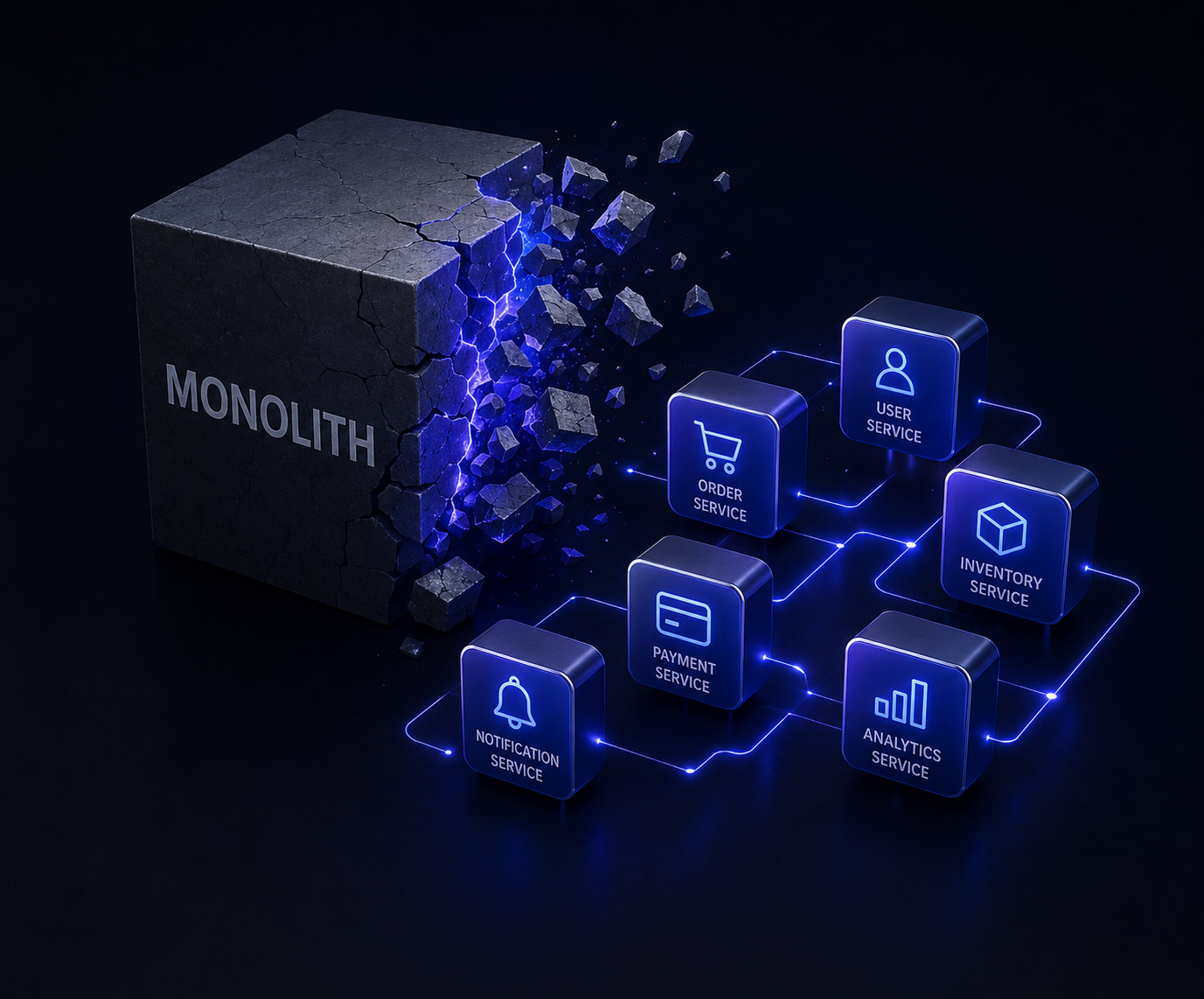
Is Microservices Right for You?
Recognize the Signals Before You Re-Architect
Microservices introduce complexity and operational overhead. These indicators help determine whether decomposition will unlock meaningful business and engineering value - or whether a modular monolith remains the better choice.
Different parts of your system have different scaling needs
Multiple teams conflicting in the same codebase
You need different technologies for different workloads
Failure in one area cascades down everything else
If these aren't your problems, a well-modularized monolith may serve you better.
Our Decomposition Approach
A Structured Path to Microservices
We don't rewrite everything at once. Our methodology prioritizes clear boundaries, incremental delivery, and controlled migration to reduce risk at every stage.
Step 01
Domain-Driven Design
We start with business domains, not technical layers. Services are defined by business capability, not by database tables or API endpoints. This is the difference between microservices that stay manageable and ones that become distributed monoliths.
View more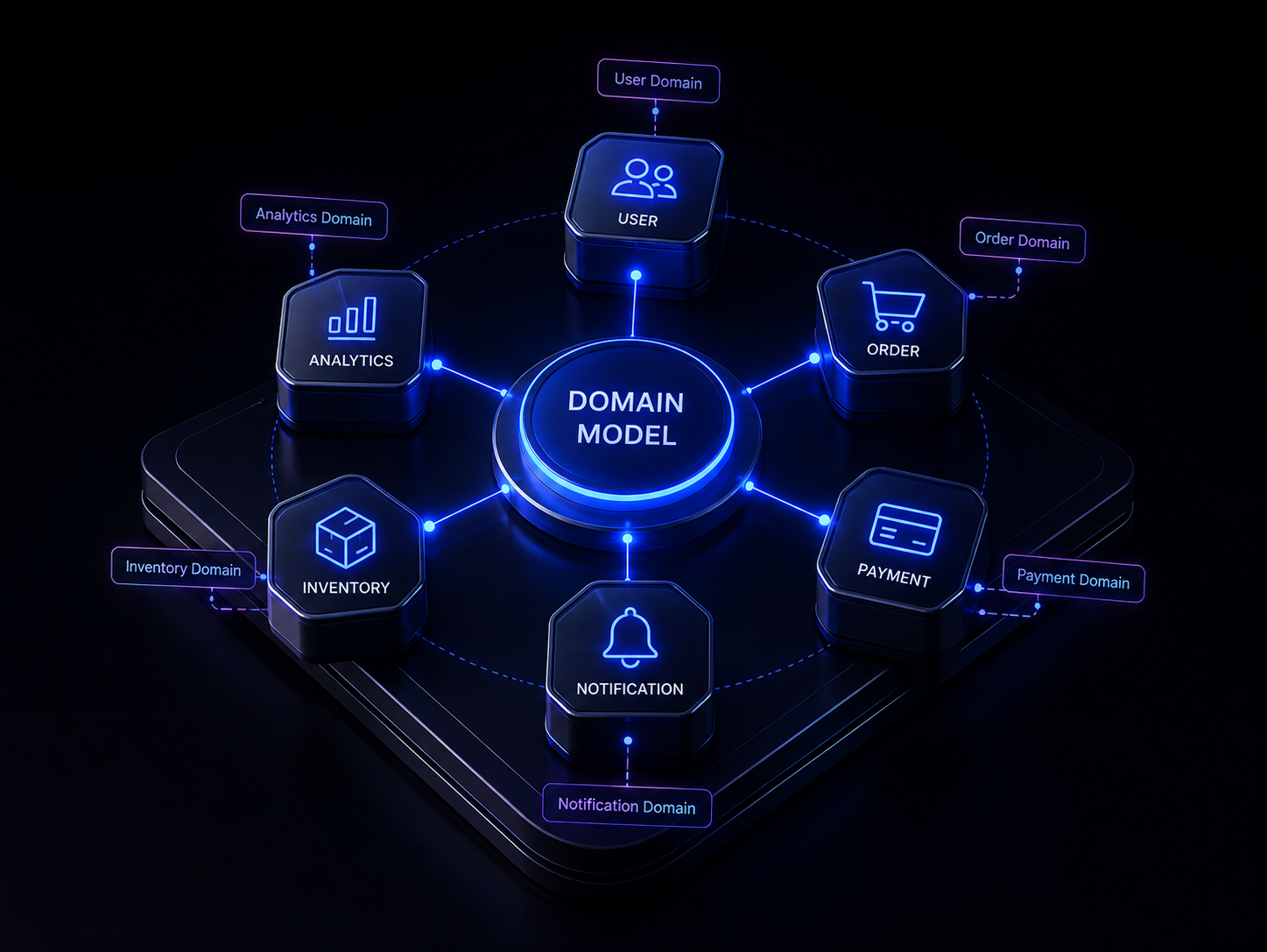
Step 02
Incremental Extraction
We identify the services with the most independent scaling needs and the clearest domain boundaries first. Each service is extracted, tested, and deployed independently before moving to the next.
View more
Step 03
Anti-Corruption Layer
During migration, we build interfaces between the legacy monolith and new services so both can coexist and evolve independently. Clean boundaries from day one.
View more
What We Design and Build
The Building Blocks of Modern Microservices
We architect the systems, integrations, and operational capabilities that enable independently deployable services to scale reliably over time.
Service boundary definition and domain mapping for clearly defined business capabilities.
API contracts between services (REST/GraphQL/gRPC) to ensure consistent communication.
Asynchronous communication patterns (event-driven architecture with message queues)
Service discovery and load balancing across distributed environments.
Distributed tracing and observability for end-to-end visibility.
Circuit breakers and resilience patterns to improve fault tolerance.
API gateway design for secure and streamlined access management workflows.
Data isolation strategy - each service owns its data to maintain clear ownership boundaries.
Deployment pipeline per service (independent CI/CD) for autonomous deployments.
Loading
Ready to Modernize?
Build the Next Version of Your Architecture
Whether you're validating the need for decomposition or planning the migration itself, we'll help you move forward with clarity and confidence.